
Decision Fatigue in Automotive Sales: How Mental Overload Quietly Undermines Performance
Jan 18, 2026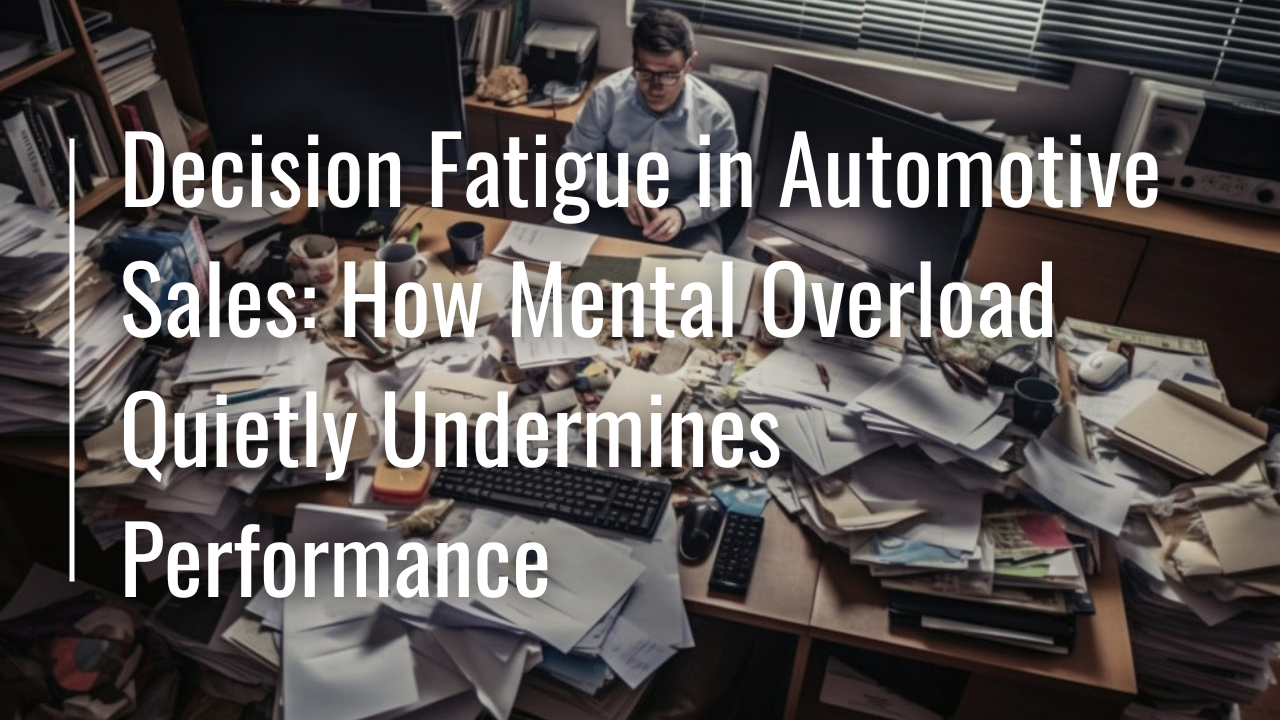
Decision Fatigue in Automotive Sales: How Mental Overload Quietly Undermines Performance
Ever finish a long shift and wonder why your patience wore out before the day did? In automotive sales, we call that decision fatigue — the slow, sneaky drain that makes good Sales reps sound tired, rushed, or flat-out checked out. It’s not about grit or attitude. It’s about mental energy running low after a day of nonstop choices.
What decision fatigue looks like
From the moment you step on the lot, you’re making choices: who to greet first, what questions to ask, how to handle objections, whether to offer a deal. Each decision uses a little bit of brain power. By hour five, that power can be gone. When that happens, the tendency is to stop weighing options and start taking the easiest path - choosing the default, rushing answers, or skipping the deep listening that wins deals.
On the floor it shows up small: shorter conversations, quick assumptions, fewer clarifying questions, and more snap judgments. It doesn’t look dramatic. It looks like being “just off” — but those tiny misses add up and push customers to feel unheard or pressured.
Why sales is a perfect storm
Auto sales isn’t repetitive work you can just do on autopilot. Every customer is different, emotions run high, and pressure is constant. That mix forces you to adapt often — and repetitive adapting drains you. Add time pressure, the need to balance info and empathy AND the stakes of a deal, and you’ve got a recipe for mental overload.
Willpower isn’t the fix
You can’t just grit your teeth and expect willpower to carry you through. Willpower itself is a limited resource. If you try to muscle through every afternoon slump, you’ll win some battles but burn out faster. The smarter play is to cut down the number of decisions you have to make.
Structure is your secret weapon
Top performers don’t rely on raw endurance. They build routines that remove small, wasted choices. Use checklists, scripts for common moments, and clear SOPs so you don’t have to reinvent the wheel every time. When next steps are pre-decided, your brain reserves energy for what matters: reading people and solving real problems.
Structure helps in three big ways:
- it lowers mental friction
- it steadies your emotional tone, and
- it keeps listening sharp.
When your process is solid, you can focus on the customer instead of fighting your own fatigue.
Small habits that protect your brain
You don’t need a complete overhaul. Try a few simple moves:
• Batch similar tasks (follow-ups, paperwork) so you don’t switch gears constantly.
• Use a short script for processes like initial greetings to avoid decision overload on repeat interactions.
• Schedule micro-breaks — two minutes to breathe, reset, and drink water — especially after a rough conversation.
• Outsource or delegate low-value choices when possible (pricing approvals, small admin decisions).
• Keep 1-2 “go-to” questions that open real listening, not just small talk.
Do one of those for a week. You’ll notice fewer missed cues and fewer frustrated customers.
The payoff: smarter energy, better outcomes
When you protect your mental energy, your conversations become clearer and more patient. You catch emotional cues you used to miss. You make better recommendations and avoid pushing solutions too fast. That consistency builds trust, and trust closes deals.
Final thought
Decision fatigue is invisible until it’s not. But it’s fixable. Work smarter by removing unnecessary choices, build simple routines, and give your brain the small breaks it needs. In a job built on human connection, preserving your mind is not optional — it’s the edge you need to win.
