
From White Belt to Customer Sensei
May 04, 2026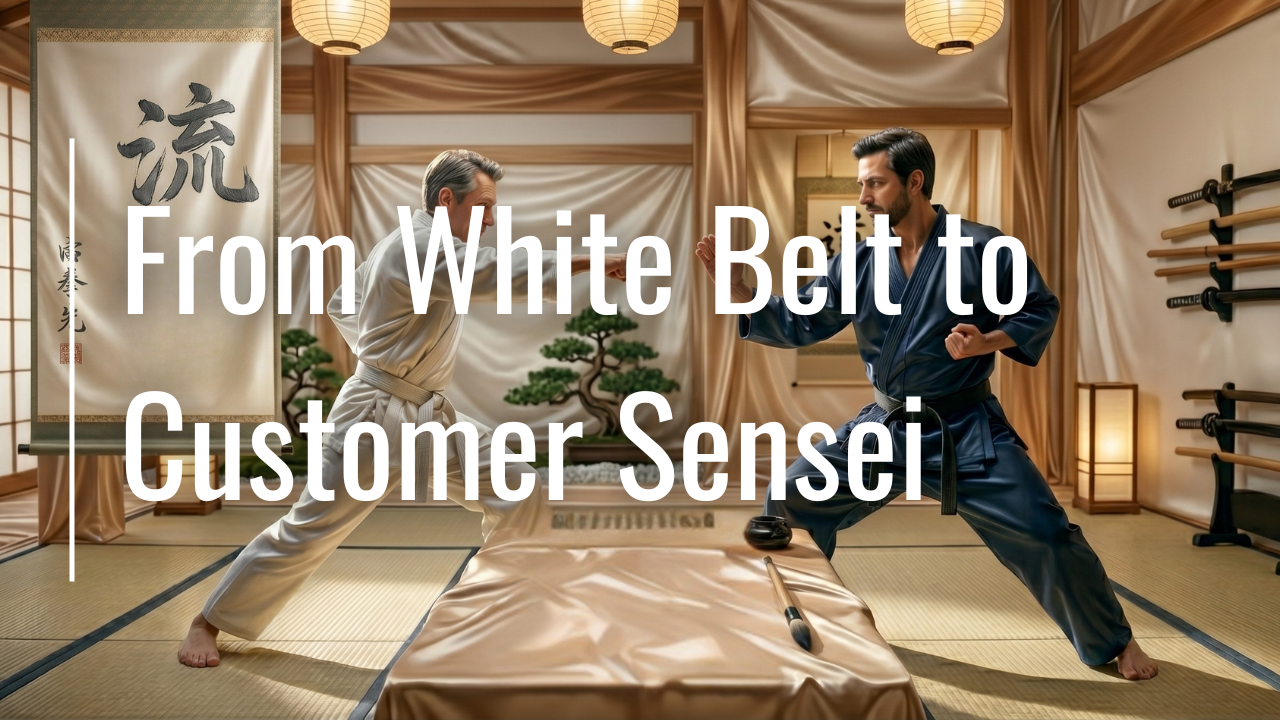
From White Belt to Customer Sensei
You are not far off. You are just unrefined.
The version of you that closes consistently, earns real respect and builds income that compounds over time? That version is already in there. It does not require a personality transplant. It requires structure, repetition, and discipline applied in the right places.
The Shift That Unlocks Everything
Most salespeople walk into a conversation thinking about the deal. Top performers walk in focused on the person. That single difference determines more about your outcome than almost anything else you do.
When you stop chasing the result and start understanding the human in front of you, customers feel it immediately. The pressure disappears. The conversation opens up. Instead of guessing what they need, you start hearing it directly from them. They tell you what matters. They reveal, almost without realizing it, exactly how to help them. And THAT helps YOU.
That kind of insight does not come from a better pitch. It comes from a higher standard of conversation.
Discipline One: Lead with Understanding
People do not need to be convinced first. They need to feel understood first.
When a customer hesitates or pushes back, that is not rejection — it is information. The first move is not to fix the concern or talk them out of it. The first move is to acknowledge it. Something as simple as "That makes sense" or "I can see why you'd feel that way" resets the room. It lowers resistance without giving anything away.
When a customer feels safe, the real conversation begins. They stop guarding themselves and start sharing what is actually on their mind. That trust is where your influence begins.
Discipline Two: Ask Questions That Actually Matter
The most effective salespeople talk less than you might expect — not because they have nothing to say, but because they have learned that a great question is worth more than a great presentation.
"What has been frustrating about your current vehicle?" or "What would make this decision feel easier for you?" stops the guessing and starts the leading. Customers hand you the roadmap to the sale, often without realizing it.
Two phrases worth keeping close: WAIT — Why Am I Talking? And WAIST — Why Am I Still Talking? Silence after a good question is not awkward. It is where the most valuable information lives. Let the customer fill it. What they say next will tell you more than another two minutes of presenting ever would.
Discipline Three: Build Momentum Early
Closing is not something that happens at the end of a conversation. It is something you build throughout it, one honest moment at a time.
Every small agreement matters. Every "yeah, that's important to me" is momentum — a customer investing in a direction moving toward yes. Questions like "That would make your mornings a lot easier, right?", or “Did you notice how well the vehicle handled around that tight corner?” are not manipulation. They are clarity tools. You are helping the customer hear themselves confirm what they already value.
You do not rise to the close. You fall to the process you built before it.
Discipline Four: Let Them Own the Decision
Most salespeople, when they feel a deal slipping, instinctively tighten their grip — more urgency, more pressure. But control does not create commitment. Their ownership of the outcome does.
"What would you like to accomplish today?" and "How do you want this to go?" are simple questions with significant impact. They signal respect. They tell the customer this conversation belongs to them. And when people feel that kind of respect, they stop protecting themselves and start building the decision WITH you.
People buy in to what they help create. Give them something to be part of, and commitment follows naturally.
Discipline Five: Connect to What Actually Matters
Usually, nobody does or doesn’t buy a vehicle just because of a payment. They buy it because of what that vehicle means for their life — reliability for their family, confidence behind the wheel, freedom in how they move through their day. The payment is just the logistics of getting there.
This is the difference between explaining features and translating them. Not just safety equipment — peace of mind for every school pickup. Not just fuel efficiency — less money going out the door every month. Not just capability — the confidence to handle whatever the week brings.
The barometer for the experience you’re creating for your customer: would I handle this conversation the same way if this were someone I genuinely care about? When the answer is yes, you know you are doing it right.
The Identity Shift That Changes Your Results
When your identity is "salesperson trying to close deals," your habits reflect that — reactive, inconsistent, focused on outcomes over process. But when your identity shifts to "trusted consultant building a relationship and skillset," everything changes. Different focus, different results.
The professionals who build real careers here are not waiting for better leads or a more favorable market. They own their development. They treat every interaction as a chance to get better at something specific.
You are not stuck because of external conditions. You are just unskilled in the right areas — and that is genuinely good news, because skill is completely trainable.
The Opportunity in Front of You
Every customer is a rep. Every conversation is practice. Every interaction — whether it closes or not — is a chance to sharpen something specific and carry it into the next one.
Which version of you shows up for the next customer?
White belts chase the outcome. Black belts master the process — and trust that the outcomes take care of themselves.
The mat is waiting for you to do the reps, build the strength and hone your skills. So is the best version of your career.
